
Causes
Causes
Myocardial infarction is caused by the blockage of the coronary arteries. The most common cause of this is Atherosclerosis which can subsequently lead to Thrombosis.
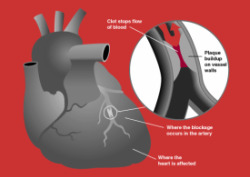 Atherosclerosis is a process by which cholesterol and fatty acids build up in the walls of arteries forming an atherosclerotic plaque. This plaque restricts blood flow to the heart. It is when one or more of the coronary arteries are completely blocked that a heart attack will occur. Other substances travelling through the blood stream can stick to this plaque, for example, inflammatory cells, proteins, calcium and waste products.
Atherosclerotic plaques can form over many years. Each plaque is soft on the inside with a firm outer shell. A crack can occur in this outer shell (plaque rupture) therefore exposing the inner core to blood. This activates the clotting mechanism in which platelets migrate to the area forming blood clots (thrombosis) around the plaque. This blocks the coronary artery preventing blood flow into part of the heart leading to an MI.
There are also less common causes that can lead to an MI including: inflammation of the coronary arteries, a blood clot forming elsewhere in the heart and travelling to and getting stuck in a coronary artery and also by spasm of a coronary artery. During this coronary spasm, the artery constricts and relaxes very fast causing a reduced blood flow to the heart (Ischemia).
Atherosclerotic plaque image courtesy of Wikimedia Commons and is thus free of any copyright restrictions.
Triggers
Heart attack rates have been found to be higher with intense exertion whether it’s psychological or physical stress. This intense exertion increases arterial pulse pressure, stretching and relaxing of arteries with each heart beat, which in turn increases stress on atheromas increasing the probability of plaque rupture.
There are also increased rates of heart attacks seen in the morning. This is due to increased levels of adrenaline (this hormone acts to increase heart rate and blood pressure) being released during these hours which can again contribute to rupture of atherosclerotic plaques. Platelets are also found to be stickier in the early hours of the morning.
Severe infections can also trigger an MI, for example, pneumonia.
Risk Factors
There are several risk factors associated with having a myocardial infarction. Most of these factors cause atherosclerosis therefore increasing the risk of an MI.
Risk factors include:
 Smoking: increases the chance of atherosclerosis, increases heart rate, reduces the ability of the blood to carry oxygen so the heart receives less oxygenated blood and narrows blood vessels so increases the chance of a blockage.
- High cholesterol levels (Hypercholesterolemia): more likely to get atherosclerotic plaque build up.
- High blood pressure (Hypertension): this increases the hearts workload and damages the lining of the coronary arteries.
- Diabetes: high blood sugars are linked to the progression of coronary artery disease.
- Chronic kidney disease.
- Family history.
- Obesity: Excess weight increases the hearts work. It also increases blood pressure, cholesterol levels and the likelihood of developing diabetes.
- Age: Most heart attacks occur in people over the age of 50 and become more likely with increasing age.
- Stress: can cause an MI by increasing the chance of plaque rupture.
 High alcohol consumption: this can increase blood pressure, increase triglyceride levels and contribute to obesity.
- Drug abuse.
- Males are more at risk than females: An MI is three times more common in men than in women.
- Previous heart disease: e.g. angina.
- Poor diet and Lack of exercise: this will increase blood pressure, cholesterol levels and will cause obesity which can lead to the onset of diabetes.
Many of these rick factors are modifiable (see preventions in Diagnosis and Treatment).
Smoking image courtesy of Flickr under the creative commons licence and is thus free of any copyright restrictions.
Beer image is also courtesy of Flickr under the creative commons licence so is free of any copyright restrictions. This image has been cropped.