
Symptoms
Symptoms
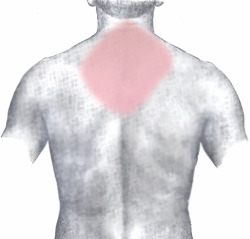
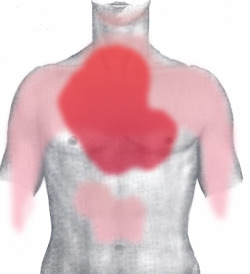 The most common symptom of a myocardial infarction is severe chest pain. This chest pain is known to feel like a sensation of tightness and pressure and is named angina pectoris. This pain travels mainly to the left arm but can also affect the lower jaw, neck, right arm and back.
The pictures on the right show front and rear views of the main pain zones during an MI. The dark red shows the most typical areas whereas the light red shows possible areas.
Other symptoms
A variety of symptoms can occur including:
- Difficulty breathing or shortness of breath (Dyspnea)
- Nausea and vomiting
- Headache
- Sweating
- Weakness and light headedness
- Palpitations: irregular heart beat
- Indigestion (Dyspepsia)
Loss of consciousness and sudden death can occur in severe cases.
 Women’s symptoms
Women’s symptoms can often differ. These include:
- Upper back and shoulder pain
- Jaw pain
- Light headedness
- Chest pain and pressure
- Pain which spreads to the arm
- Weakness and Fatigue
- Sleep disturbances
- Indigestion (Dyspepsia)
- Anxiety
- Shortness of breath (Dyspnea)
These symptoms often occur up to one month before the heart attack.
Silent MIs
Approximately one quarter of all myocardial infarctions are silent with patients experiencing no symptoms.
These heart attacks can be completely painless or symptoms may be mild and be perceived to just be heart burn or wind.
Silent MIs can occur in anyone but are more common in patients with diabetes.
Silent or mild heart attacks can be just as life threatening as ones causing severe pain.
Front image of pain zones courtesy of wikimedia commons and is thus free of any copyright restrictions.
Rear image of pain zones is also courtesy of wikimedia commons so is also free of any copyright restrictions.